Do parrots need baths? How often?
Most parrots do best with a bath several times a week. Here's how often to offer one, which methods to try, and creative ways to win over a bird who'd rather stay dry.
On this page
In the wild, parrots get wet all the time. Rainstorms roll through, leaves drip, and morning dew soaks everything a foraging bird brushes against. That’s especially true for our New World species, like macaws, Amazons, and conures, many of whom come from tropical rainforests where, according to Britannica, humidity usually stays above 50 percent during the day and approaches 100 percent at night. Their feathers and skin were built for that kind of moisture.
Our homes are a very different place. Air conditioning in the summer and heating in the winter keep indoor air dry for most of the year, and avian vets at Lafeber note that this dry air does feathers and skin no favors. Regular baths are one of the simplest ways to give some of that moisture back.
Why bathing matters
Water plays a big role in how parrots care for their feathers. When it’s missing, their whole grooming routine suffers, and over time that shows up in their skin and plumage.
VCA’s avian veterinarians call bathing “essential for a bird’s feather maintenance and skin hydration.” Here’s what a good soak does:
- It softens the waxy sheaths around new feathers so they’re easier to preen away.
- It rinses off dust and dander.
- It almost always kicks off a good preening session.
- It gets your bird moving, with flapping, fluffing, and wing-spreading that’s great natural exercise.
How often to offer a bath
There’s no single number that fits every bird, but vets land in a pretty consistent range. Think of bathing as something you offer, not something you force.
- Most birds: at least three to four times a week, according to VCA.
- Birds who love water: daily is great, as long as they can dry somewhere warm.
- Birds new to bathing: start with once or twice a week and build from there.
Bath options to try
Every parrot has preferences. Some want a full soak, some want a light drizzle, and some only want to dunk their head in the water dish and call it a day. Try a few and let your bird vote.
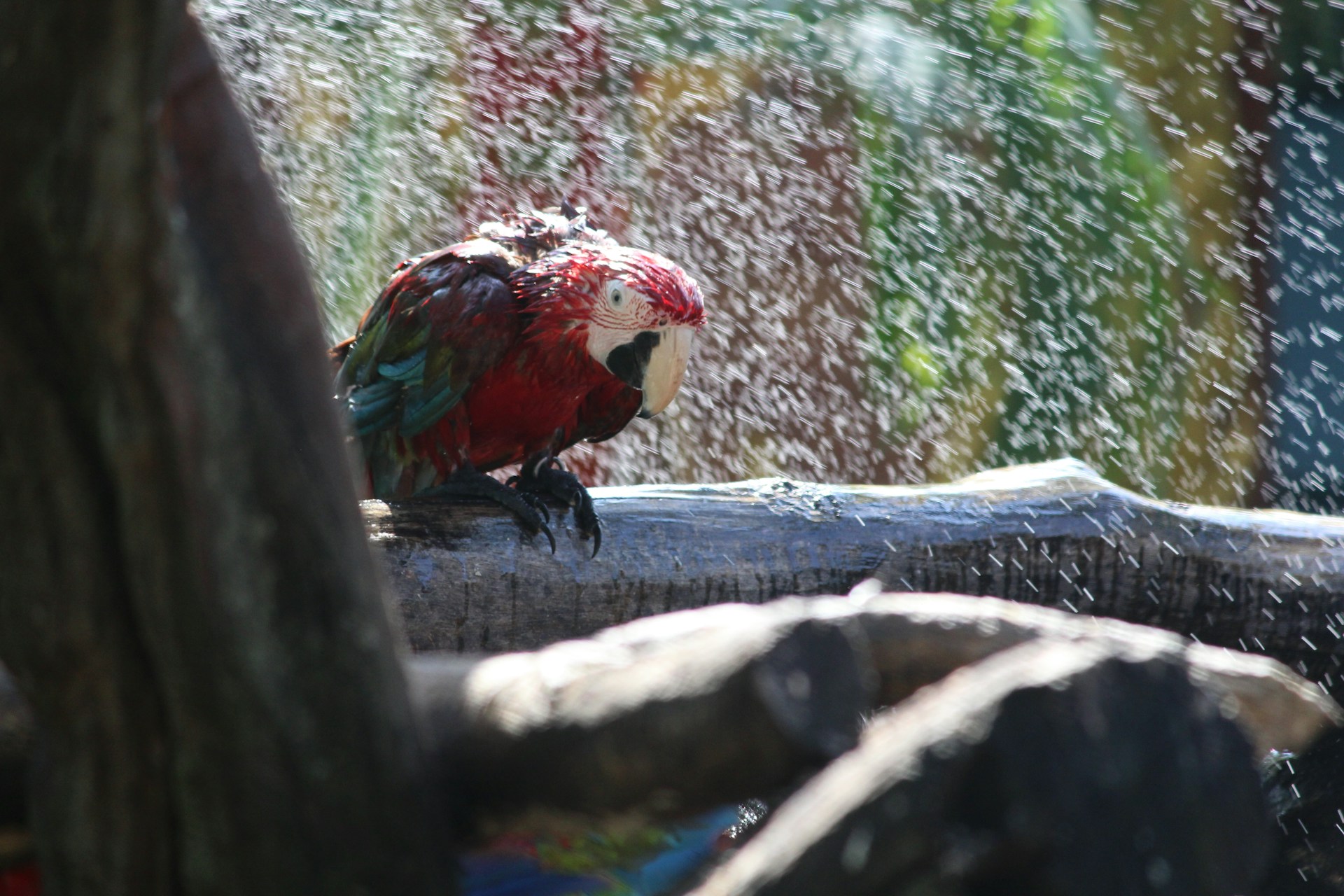
- Misting: Fill a clean spray bottle that has only ever held water, and mist above your bird so it falls like light rain. This is the gentlest place to start.
- Shallow dish or sink: Offer a low-sided dish with a little lukewarm water, or a gentle trickle from the tap. It’s great for birds who like to splash on their own terms.
- Shower perch: Larger parrots often love the steam and sound of a shower. Place the perch out of the direct spray so your bird gets splashed, not pelted.
- Outdoor rain: On warm days, supervised time in a light rain can be a highlight. Use a secure aviary or travel cage with shelter and no chilly wind.
How to win over a bird who hates water
Plenty of companion parrots were hand-raised without ever learning to bathe, so a nervous reaction to water is really common. Start with the basics below, and if those don’t do the trick, try some of the less conventional ideas that have worked in my flock.
Start with the basics
- Introduce the tools first. Let your bird see the spray bottle without anything happening.
- Keep it at a distance. Mist the air nearby or your own hand.
- Watch for interest. Leaning in, fluffing up, lifting wings, or chattering are all good signs.
- Reward curiosity. Use praise or a favorite treat.
- Stay consistent. Offer water around the same time each day, when your bird is already relaxed.
Then get creative
Teach bathing like a trick. If your bird already knows a few behaviors like targeting and understands the clicker, you can use the same approach with water. Start small, with a tiny bit of mist on the far edge of their space, and reward them for staying calm. Then slowly build up, rewarding each step they accept. You’re breaking bathing into small, rewardable steps, just like any other trick.
Make the shower look like the best place in the house. Try setting your bird up on a perch just outside the shower while you’re in it, and make it look fun. One of my birds would only bathe this way for about six months. Eventually, we were able to introduce a more normal bathing routine, but the shower is what got us there.
Throw a bath party. Parrots are flock animals, and they want to join in on whatever looks fun. One day, I had my daughter stand in front of me while I sprayed her with the spray bottle, and she danced and laughed the whole time. Then we switched, and before long, it had turned into a full-on party. My party parrot couldn’t stand being left out. He wanted in and started mimicking exactly what we were doing.
Try the vacuum. This one’s a little unexpected, but in my house, running the vacuum seems to trigger a bathing response. I’m honestly not sure why it works, but if your bird starts fluffing and flapping at the sound, that’s a great moment to offer water alongside it.
What to avoid
Most bath-time problems come down to temperature, products, or pressure. A few simple rules keep bathing safe and comfortable.
- Cold water or a cold room. Always use lukewarm water and dry your bird somewhere warm and draft-free.
- Bath products or sprays. Birds swallow whatever’s on their feathers when they preen, so VCA recommends plain water only.
- Spraying the face directly. Aim above your bird instead.
- Forcing it. Sneak attacks, chasing, or holding a bird under running water make the next bath harder.
- Hair dryers. VCA cautions that it’s easy to overheat a bird or dry their skin too fast. The University of Illinois College of Veterinary Medicine also notes that some hair dryers contain nonstick PTFE coatings, which release fumes when heated that can be deadly to birds. Air-drying is the safer choice.
Make it part of the routine
Once you find the bath your bird loves, it becomes one of the easiest wins in their week. It only takes a few minutes, and it supports their feather and skin health for the long run.
- Try a couple of methods and notice what your bird responds to.
- Pick two or three regular bath days to start.
- Build from there as your bird gets more comfortable.
Giving them what they were built for
Our parrots didn’t choose to live in climate-controlled living rooms, so it’s on us to fill in the gaps. Most of the time, that means offering what they’d find in the wild, like fresh food, room to move, and plenty of water. Sometimes it means patiently teaching them that something new is good for them.
Bathing is a perfect example. It may take weeks or even months for a hesitant bird to come around, but every small step counts. And the first time your bird leans into the mist, fluffs up, and starts preening like they’ve been waiting for it all along, you’ll know it was worth it.